![By Joshua Favaloro (Own work) [CC BY-SA 4.0 (http://creativecommons.org/licenses/by-sa/4.0)], via Wikimedia Commons](http://blogs.unsw.edu.au/cityfutures/files/2015/12/Barangaroo_South.jpg)
By Joshua Favaloro (Own work) [CC BY-SA 4.0 (http://creativecommons.org/licenses/by-sa/4.0)], via Wikimedia Commons

By Joshua Favaloro (Own work) [CC BY-SA 4.0 (http://creativecommons.org/licenses/by-sa/4.0)], via Wikimedia Commons

As November draws to a close, it seems fitting to reflect briefly on a particularly busy and important month for the City Futures team. This month saw CFRC celebrate its 10th anniversary, a real testament to the hard work and persistence of a great many people over the past decade. [Read more →]

Recent changes to strata title legislation in NSW will remove the need for all owners to agree to sell or redevelop their apartment block as a whole.
This means that some owners may now have their apartments sold against their will. Only 75% of owners in a building have to agree to the sale for a block to be redeveloped.
The NSW government hopes that this change will increase the number of homes in popular parts of the city and allow older, run-down properties to be rebuilt. Other Australian states and territories are either considering implementing a similar strategy, or already have.
However, new research released today shows that while this may increase the rate of redevelopment of older blocks, on their own these changes may not improve housing affordability or availability.
In a report launched today, we anticipate that this change will:
For this project, we analysed data from the 2011 census, the NSW Strata Title database and the NSW Valuer General’s database. We interviewed 34 key stakeholders including specialist legal and financial professionals, strata management industry professionals, local planners and spokespeople for owner and tenant representative bodies. We also surveyed 1,261 strata residents and owners in properties registered prior to 1990 about their attitudes towards the redevelopment of residential strata schemes. We held workshops with strata owners in the Sydney suburbs of Cabramatta, Coogee, Mosman and Parramatta.
Our research showed that many people acknowledged the importance of these planning goals and supported the need for some type of change to allow for the easier redevelopment of strata properties.
However, many people qualified their support by saying it depended on the outcome for any given block redevelopment. Most people didn’t want to see a single owner holding out on a development purely for personal financial gain, but they also didn’t want to see a vulnerable resident removed from their home against their wishes.
People also saw the benefit of making the renewal of apartment buildings easier if this meant better buildings, better local services and amenity and increased housing affordability.
However, many people were sceptical that new buildings would be of a better quality than existing blocks, and that services and local amenity, including open space, would be provided to cater for increases in population.
Similar changes are planned in Western Australia, Queensland and overseas. The Northern Territory and Singapore and New Zealand have already made similar changes too.
Planners will need to tackle head on the challenges outlined in our research if they are to deliver a compact city that works for all residents – not just the wealthy ones.
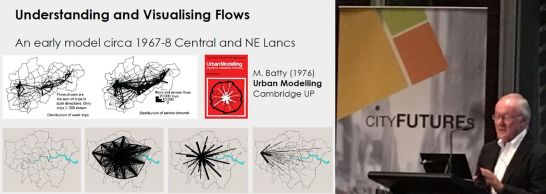
I am a new Research Fellow at the City Futures Research Centre (CFRC) in UNSW, and cannot think of a better time to start, as it is the Centre’s 10 year celebration. The week of activities with academic, government, industry and community partners at the Royal Mint in Sydney CBD was a time for looking back at CFRC‘s achievements so far, and for thinking ahead towards new challenges cities will face.
As part of this celebration Prof Michael Batty, from University College London (UCL)/Centre of Advanced Spatial Analysis (CASA), visited CFRC. On Thursday 12 November he presented a public lecture on ‘Big data, little data, real time streaming and the smart city’. The session was chaired by Prof Chris Pettit who announced UNSW’s plans for a Master of City Science to be available in 2017. [Read more →]
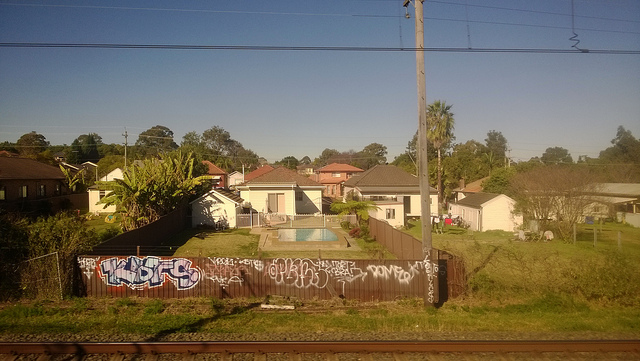
By Bill Randolph, Director, City Futures Research Centre. Originally published in the Sydney Morning Herald.
Gough Whitlam once wrote that “a citizen’s real standard of living, his children’s opportunities for education and self-improvement …are determined not by his income, not by the hours he works, but by where he lives.” In the 40 years that have passed since Gough Whitlam penned those words, far from improving, geographic inequality in Australia is getting worse. Nowhere is this more evident than in the suburbs of our major cities. [Read more →]

Here’s a tip for Federal and State politicians, and the people who advise them.
Take the current debate on tax reform.
Hit Ctrl+H.
Find ‘GST’, replace with ‘land tax’.
Hit return.
Now you’ve got a positive agenda for tax reform. [Read more →]
City Futures Research Centre is celebrating its 10th anniversary by hosting Cities@UNSW – a week of events about cities, housing, planning and urban science. [Read more →]
By Edgar Liu & Hazel Easthope
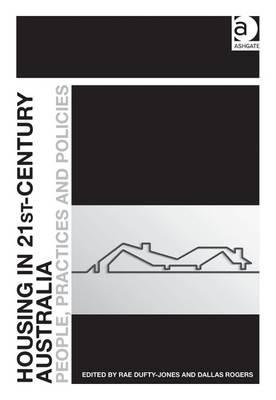
Reading the news headlines in Australia in the last handful of years, one could be forgiven for thinking that the only housing issue the general public is interested in is its price, particularly if and how first-time buyers can afford to enter the housing market, or when the housing ‘bubble’ will burst. A new book, Housing in 21st-Century Australia, edited by Rae Dufty-Jones and Dallas Rogers and with contributions from prominent housing researchers from around Australia, presents a very different picture. [Read more →]

By Bill Randolph, Director, City Futures Research Centre. This a revised version of an address given at the Cities Roundtable with the Minister for Cities and the Built Environment, Melbourne School of Design.
The way in which our cities are governed is probably the most critical issue in determining how well we collectively respond to the growing challenges our cities face. It’s the one lens through which all our responses to these challenges focus. Improving the governance of our cities should enable better policy and planning outcomes. [Read more →]
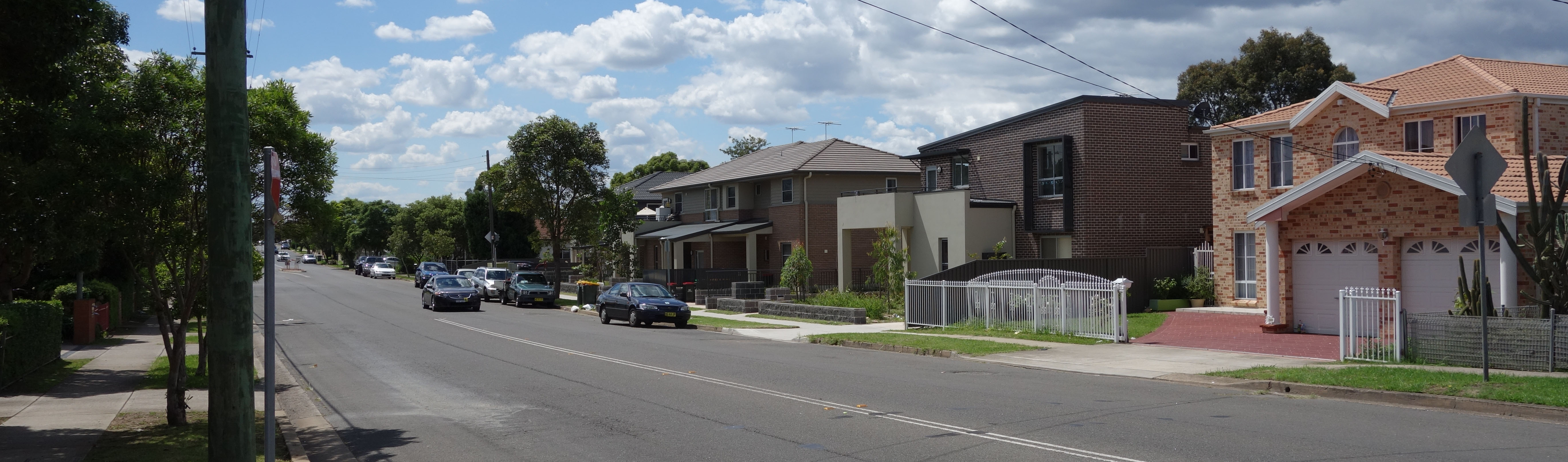
A social housing development in Parramatta, Sydney, that was initially opposed by local residents.
By Edgar Liu and Ryan van den Nouwelant. Originally published at The Conversation.
A recent application for an eight-room boarding house in the leafy north Sydney suburb of Cromer attracted over 800 objections from residents and the school community.
Proponents of the project, including governments, may be tempted to dismiss these residents as NIMBYs – members of the not-in-my-backyard brigade.
Our research, however, found that ignoring residents’ concerns and failing to allay their fears helps nobody – least of all those in dire need of affordable housing options. [Read more →]