By Rosie Steinberg

Have you ever dreamed of going to gorgeous islands surrounded by coral reefs for work? I certainly have ever since I was a little girl, and throughout March I got to realise that particular dream in Lord Howe Island Marine Park. Unfortunately, it wasn’t all sun tans and mai tais – I was there to record, monitor, and study the ongoing coral bleaching event. When I was travelling I was very nervous – what would we find? Would we be recording a climate-change induced massacre, or would the reef survive? Would this be a story of tragedy, or one of resilience?

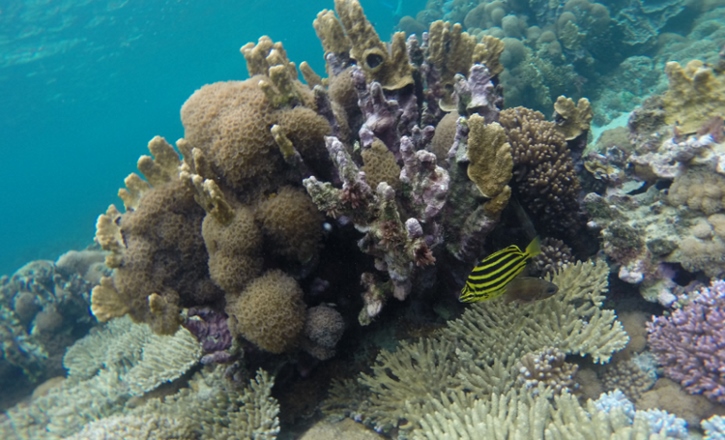
Lord Howe Island has the most southern tropical coral reef in the world and has many fish and coral species found nowhere else. It is so beautiful and unique that it has even been listed as a UNESCO World Heritage site. If you have ever been, you’ll know exactly why. It’s like nowhere you’ve ever seen – There are amazing corals everywhere, but between them are gorgeous bright green temperate algae. The fish are also a mix of tropical and temperate, with bright yellow temperate stripeys attempting to blend into schools of tropical chromis. The seamless mixing of tropical and temperate is absolutely spectacular, but it is also at risk from climate change.
I’ll give you all the bad news first – some of the bleaching was extensive. The most inland reef, surrounded by land on 3 sides, showed over 90% bleaching. That’s by far the most extreme bleaching I’ve ever seen. It was mostly the stony corals that were affected here – soft corals and anemones were more resilient, though during a second wave of hot, sunny weather even these softies started to bleach. The second most severe site was in better shape, with only 50-60% of coral bleached on the reef crest (near the surface) and the deeper areas much less affected.

Now, the good news! Some reefs were hardly affected, with less than 5% of the corals at these sites showing any signs of bleaching. These sites were generally very close to the oceanic edge of the lagoon or on the opposite site of the island, where they were regularly flushed with cool water from deeper in the ocean. Lagoons are excellent coral habitat because they protect these delicate animals from storms and let in lots of sunlight, but in our current warming climate they can get too hot, like a swimming pool in the sun.
What this tells me is that this is a story of resilience, not one of tragedy. Overall I have high hopes that we will see a lot of recovery in the coming months. When conditions improve, corals can recover from bleaching in as little as a few days, depending on the severity of the bleaching event. I hope to be able to return in late April to understand how quickly Lord Howe Island corals can recover from bleaching, and to quantify any coral death that may have occurred.
Follow me on Twitter (@RosieRiots) if you want to see how this research progresses.

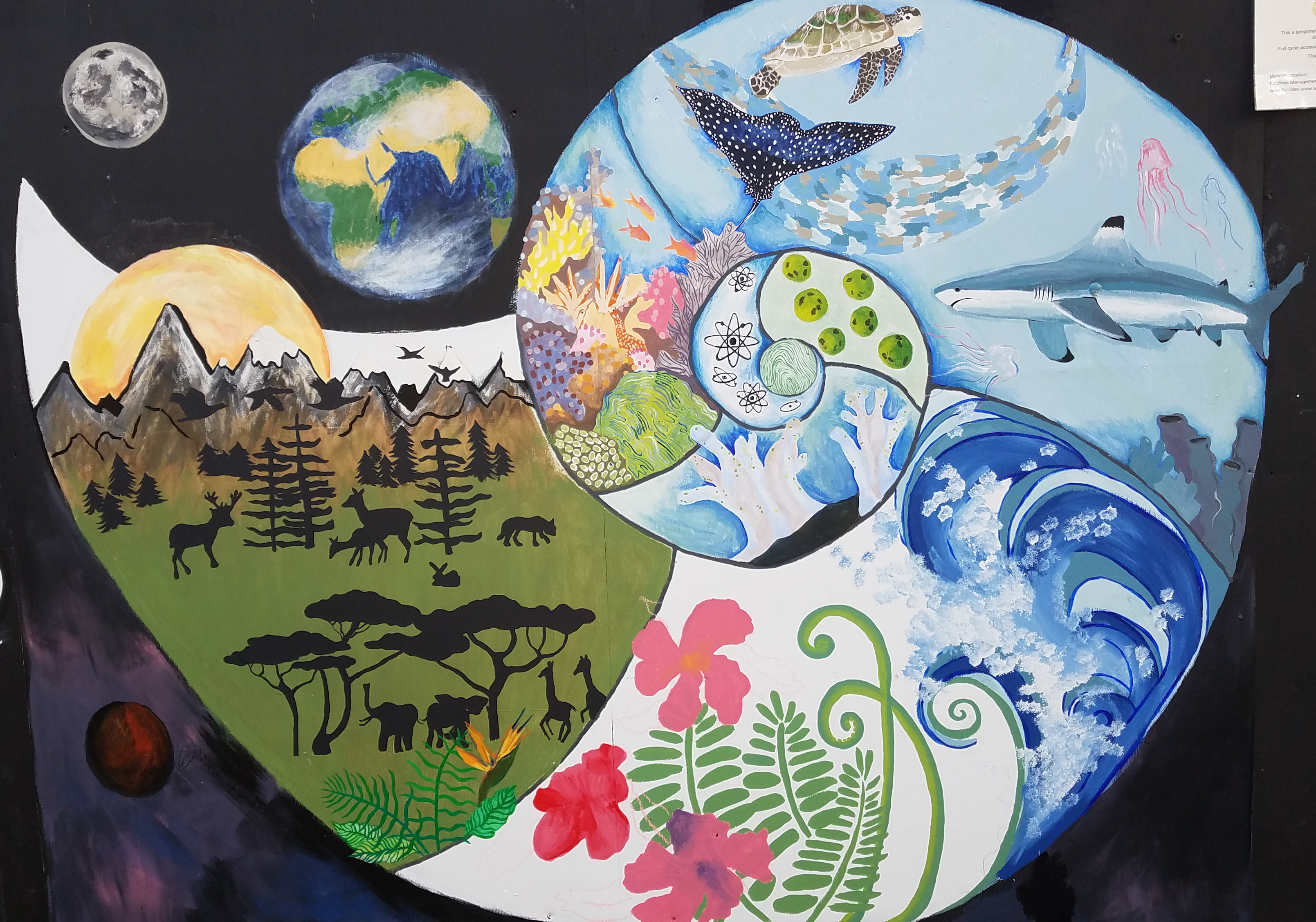
 If the eyes are the window to the soul, can art be the window to the soul of science? Those who work and study at UNSW may have noticed some new art appearing near the Matthews Food Court. The works are a collaboration between PhD researchers from several universities in NSW and artists from the greater Sydney region. The essence of the project is to communicate science through a non-scientific medium, using the mind and expressive ability of artists. Together, scientists and artists are bringing messages to life that portray the impact of climate change on coral, the importance of healthy coral and kelp reefs, the organisational complexity of marine life, and the need to preserve rare corals in temperate waters.
 @RosieRiots), a Women in Maths and Science Champion and PhD researcher in marine science studying the role of temperate soft coral in Botany Bay. Her art collaboration with Corey Nichols (
 @BornReadyArt) examines the role of soft coral in sponge garden ecosystems and encourages viewers to look deeper into their backyard oceans. As a marine scientist, Rosie was surprised that there were beautiful coral gardens so near Sydney Harbour where she works and lives. Amazed that these corals were hidden gems, she made it a goal to ensure that every Sydneysider discovered this stunning coral comparable to corals of the Great Barrier Reef. If you want to see one of her first steps towards that goal, walk down Chancellery walk, gaze upon the murals, enjoy a coffee, and (if you’re lucky) have a chat with one of the artists or scientists.
 along with many other researchers, feels the need to connect the public with the scientific community in an effective way such as artistic storytelling and she aims to pioneer this movement with projects like this one. To support her work and find out about future projects, please visit the Emerging Creatives of Sydney (ECoS) website at EmergingCreativesofSydney.com. To learn more about the mural project and to follow the collaborations on Twitter and Instagram, you can follow the scientists: