Climate science for a better world: meet Rachael Isphording

By Inna Osmolovsky

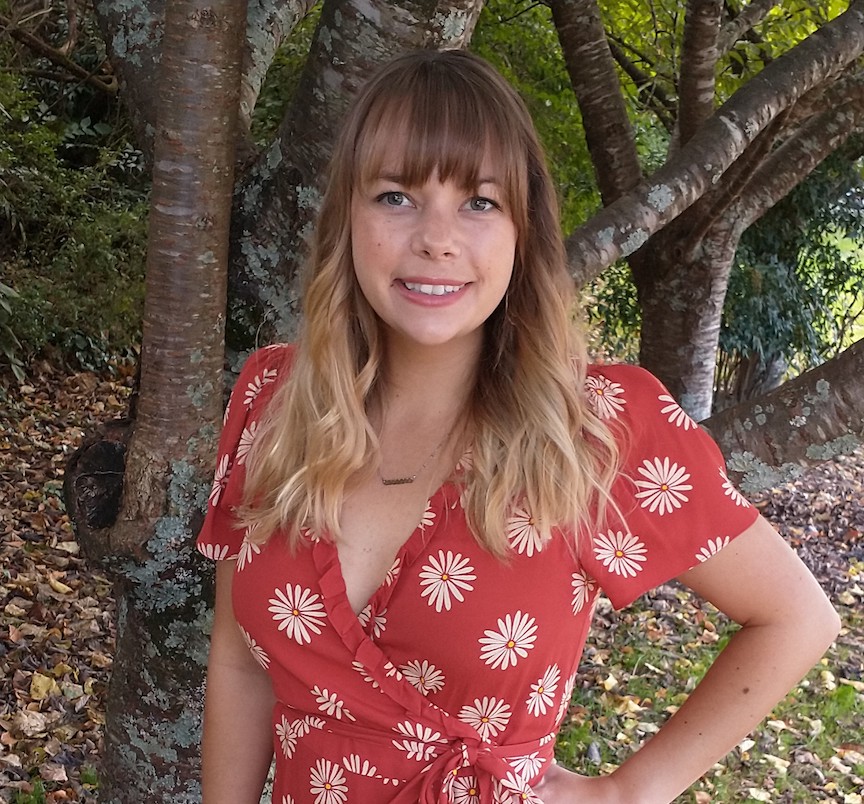
Rachael Isphording is a Scientia PhD candidate in the Climate Change Research Center at UNSW (affiliated with the ARC Centre of Excellence for Climate Extremes). She studies climate science and climate adaptation. These fields focus on understanding how and why Earth’s climate has changed in the past and how it could change in the future. The research involves close work with policymakers, stakeholders and communities, helping better prepare for high-impact, catastrophic weather and climate events. Rachael’s research focuses on understanding how well high-resolution, regional climate models simulate rainfall across Australia, on one hand. On the other, she looks into how this knowledge can be leveraged to improve stakeholder decision-making across sectors. With the official announcement of a third, consecutive, year of La Niña in Australia, her findings are helping local communities to anticipate, prepare and adapt to extreme rain events.
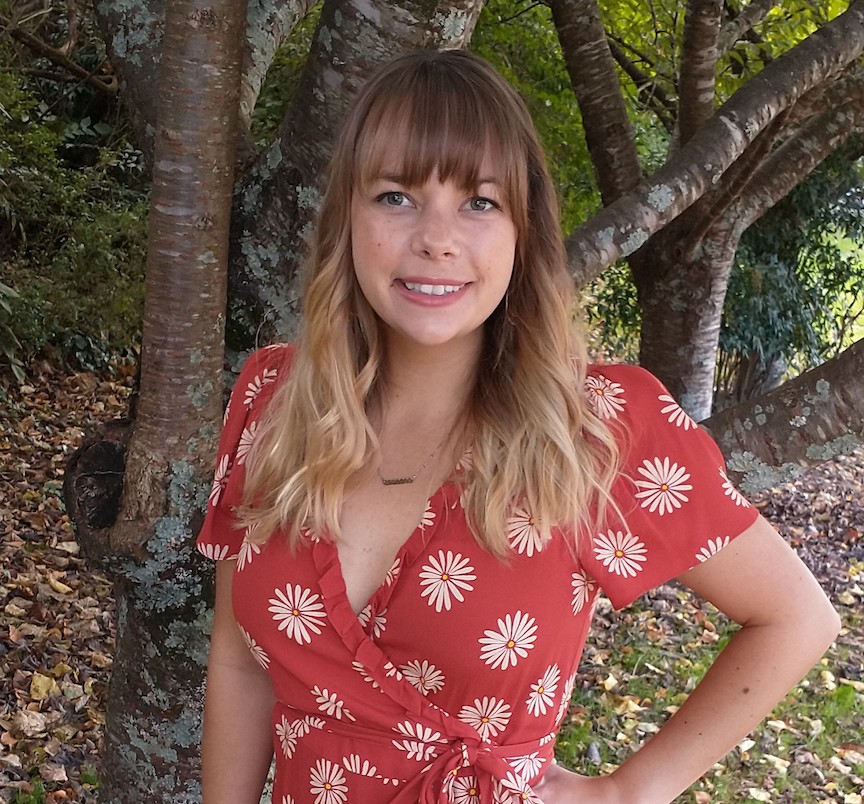
Her passion for climate adaptation research stems largely from her childhood experiences, living through Hurricane Ivan (2004) and Hurricane Katrina (2005). Growing up in Alabama, on the coast of the Gulf of Mexico, she witnessed firsthand the detrimental impacts of extreme events and their impact on the communities around her. For her, it’s not just about understanding how weather patterns and extreme events might change in the context of climate change. As a self-described humanitarian, she’s also driven by the “people” side of climate science: what does it mean for us – society – and our overall well-being? What can we do to make things better for future generations?

Her journey into academia started at Embry-Riddle Aeronautical University. There, she first aspired to become a pilot and research meteorologist, flying into hurricanes to collect data. During the completion of her meteorology degree, she took an Environmental Security course which changed the trajectory of her career.  The course focused on how climate change affects human security, helping her realize where her passion truly lies.

During the completion of her bachelor’s Rachael interned for the NASA DEVELOP Program. She was partnered with decision-makers in ‘Mobile (Alabama) Area Water and Sewer System’ company. Her role involved helping to predict how the future growth of the city could affect the local drinking water reservoir. This directly affected water quality for the local community, including Rachael’s grandparents. Rachael was empowered by the fact that the results of her research—as an undergraduate student—would inform actual decision-making to help her local communities.

Sadly, not all of Rachael’s experiences in academia were positive. After graduating with her bachelor’s and interning with the U.S. Department of Energy (DOE), Rachael pursued a PhD at a U.S. university. The working environment during that time wasn’t very supportive or healthy. Despite her impressive achievements and dedication to pursuing a career in science, she started to lose confidence in her abilities and struggled with her mental health. Rachael realized how toxic the environment was and bravely left the program with a master’s degree.

What helped her through this difficult time was a group of fellow graduate students; they supported each other through the tough times and continue to support each other to this day. They also were the ones to encourage Rachael during her challenging job search following the completion of her master’s degree. After nearly a year of rejections, she was finally offered an internship with a defense contractor at NASA. This internship helped rebuild Rachael’s confidence in herself and her abilities. The program also helped her to remember her lifelong dreams of becoming a scientist and using her knowledge to help people. After completing this program, Rachael returned to the DOE where she worked for over two years. This was when she applied and was accepted into the Scientia PhD program at UNSW, researching climate change and water security – her dream research.
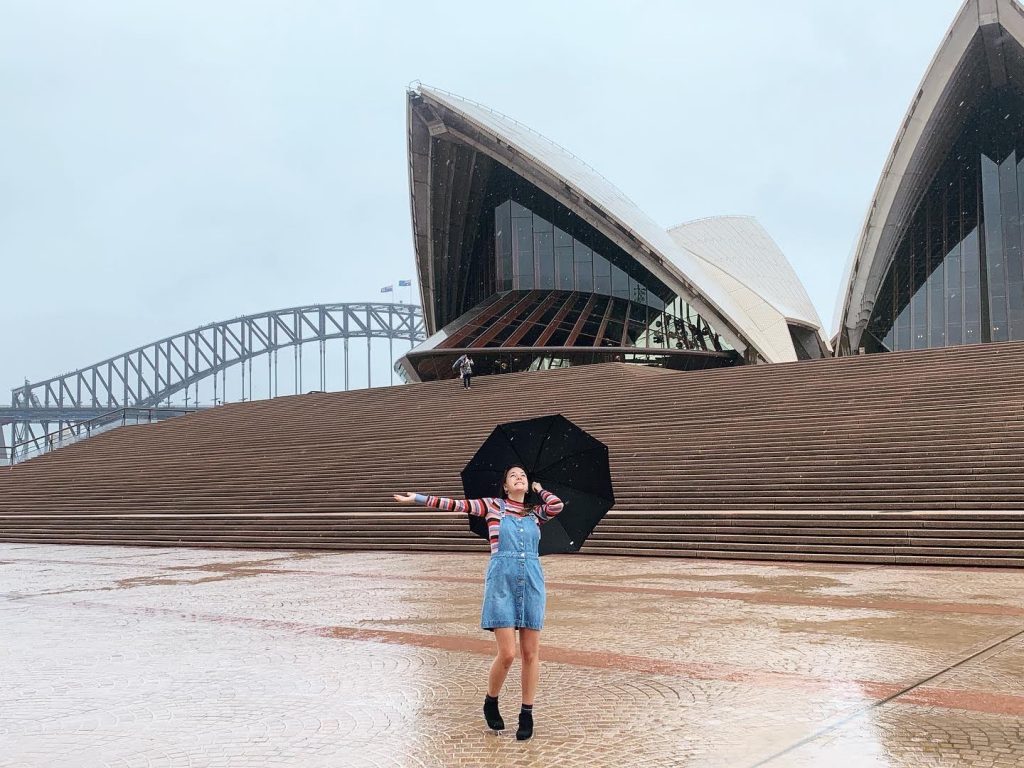
A picture says 1000 words! Rachael studies rainfall across Australia

Nowadays, a typical day in her life—while not traveling abroad for exciting workshops, conferences, and collaborations—includes exploring how well regional climate models simulate rainfall and how rainfall patterns across Australia may change in the future. She works with local stakeholders to understand the challenges they face and determine how climate information can help to inform their decision-making.
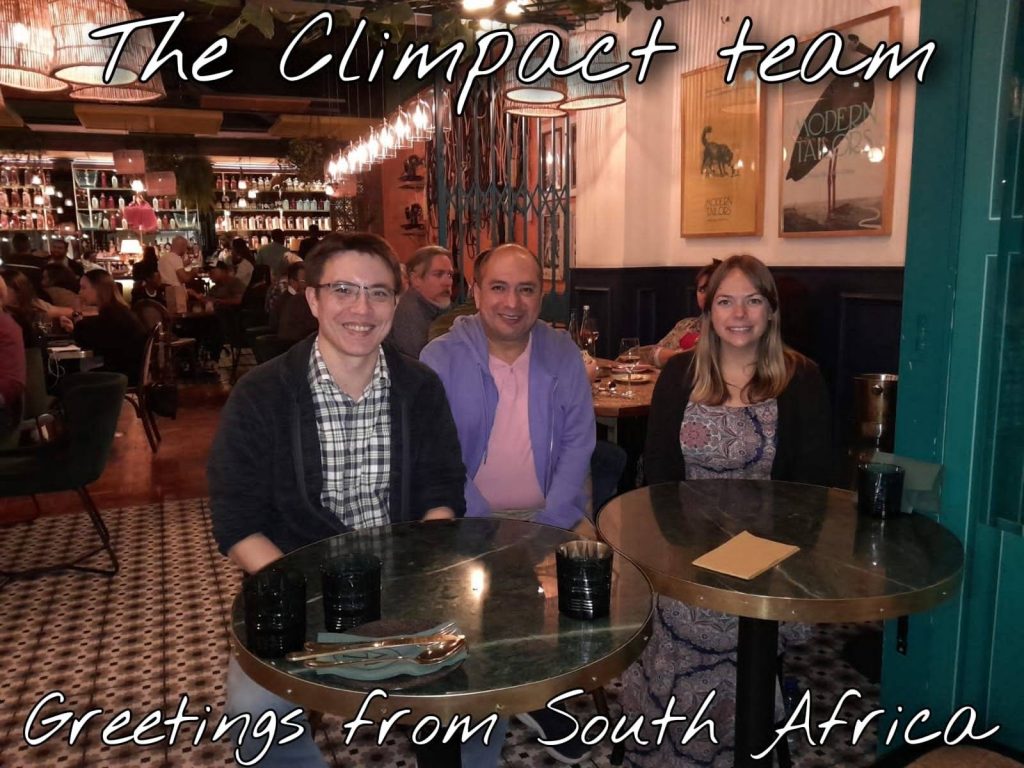
While traveling to South Africa for a World Meteorological Organization (WMO) Workshop (September 2022), Rachael worked with fellow climate scientists, Nicholas Herold, and Jorge Vazquez-Aguirre, to help sector leaders from different African countries analyze historical climate data to include in their climate adaptation plans

Understanding rainfall is surprisingly complex – where will it rain? For how long? How much rain will fall, and when? What are the diurnal rainfall cycles? What will rain patterns look like during extreme droughts? Or extreme rainfall? For her research, Rachael is analyzing over 1 terabyte of observational and climate model data. To manage the analyses of such large quantities of data, Rachael works on the Australian supercomputer.
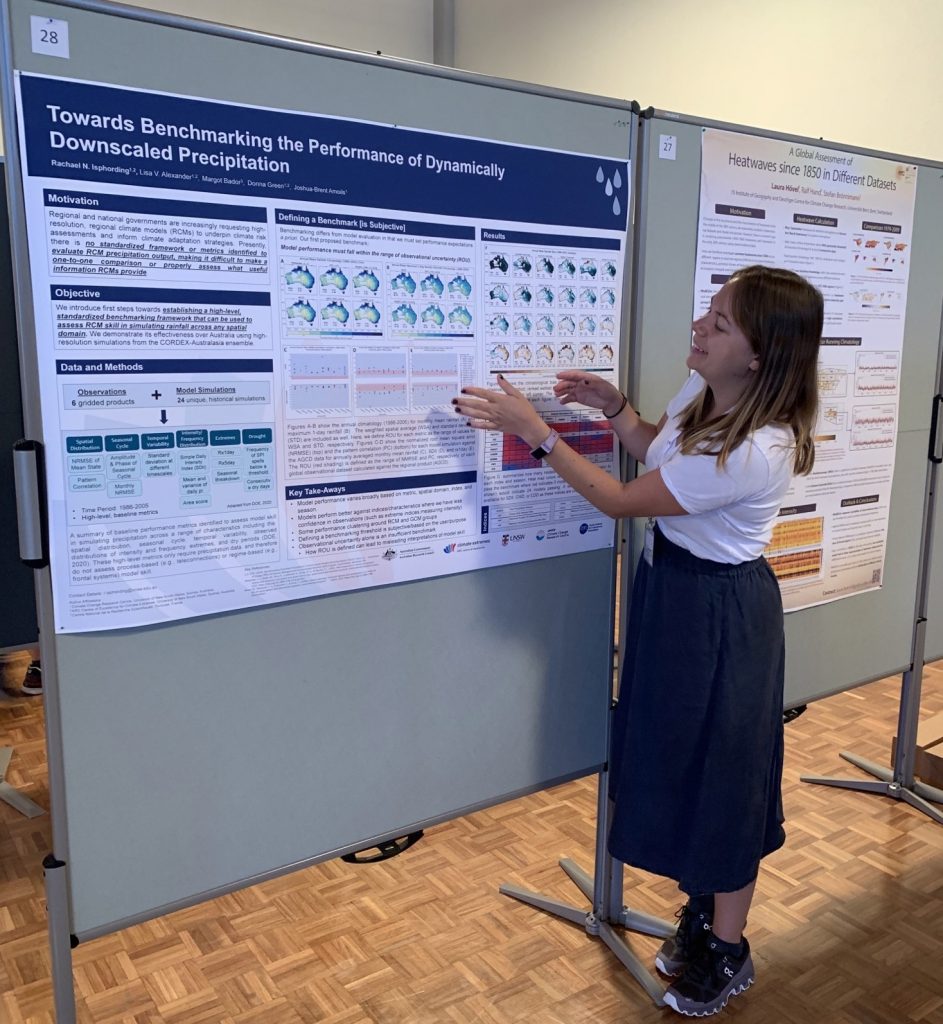
Rachael presents her research at the Swiss Climate Summer School in Grindelwald, Switzerland (August 2022)

Rachael says that she is very grateful to have found such a supportive research department and supervisors at UNSW.  Her all-female supervisory team is a major source of inspiration and encouragement for her as she continues to grow and learn, professionally and personally. She also takes full advantage of being a PhD student – acknowledging that she is still learning and embraces asking others for help to expand her skillset and expertise.

In her role as a Women in Science and Maths champion, Rachael hopes to inspire other women and young girls to pursue careers in STEM. She hopes that by telling the story of her unique career path—the hardships and successes— she would help others to embark and persevere through their own journey of realizing their dreams. Rachael hopes to inspire young girls to believe that their only limitation is their own ambition.

Follow Rachael on Twitter!
The (un)Natural History of Taxidermy

If you’ve read my other blog, you know I love a hands-on craft that dovetails with my interest in nature. I love macabre arts, crafts, and science, so it follows that I also love taxidermy. 

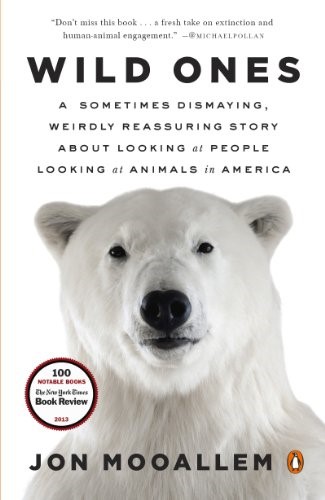
Several years ago, I read Wild Ones: A sometimes Dismaying, Weirdly Reassuring Story About Looking at People Looking at Animals in America. It isn’t a book about nature. It’s about the oddly curated human-animal interactions in our modern lives, and the weird tactics we have instituted to preserve nature as objects, sometimes in exchange for their wildness. In one chapter, we are told a bit of a history about a famous American taxidermist.

But I’d like to start with a story of an unfamous American taxidermist.  

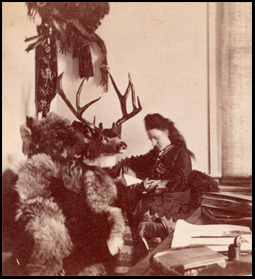
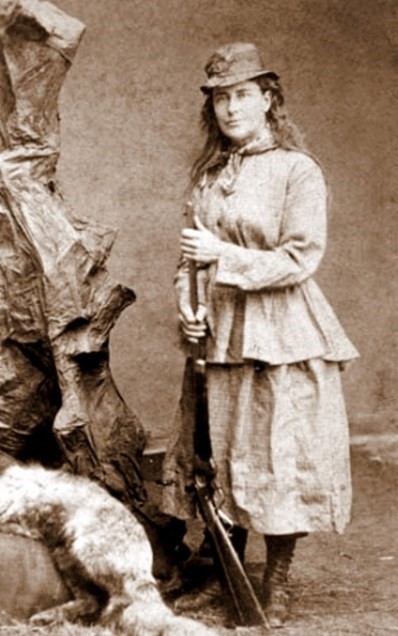
Martha Maxwell of Boulder, Colorado was enthusiastic about recreating the beauty of the natural world through taxidermy. She loved arranging animals in positions that accurately anatomized their natural behaviour to preserve a visual record of Colorado’s wildlife for others to learn from and appreciate. Martha started out in taxidermy accepting carcasses from neighborhood boys, but eventually started hunting her own animals and became an excellent sharpshooter. Doing all the preparation herself became important to her, since this was the stage when she could best study the animal, its movement, and its habitat. Whether she was working with birds or bison, while skinning the caracass she was careful to take exacting measurements of all aspects of the body so that she could create a perfect replica.

Later on, she began hiring a blacksmith to craft a light frame. She would specify the exact dimension for each specimen, and then after the blacksmith made the frame, she covered it with cloth before sewing the animal skins over it. These were innovative and novel methods, and part of what made her works quite popular.

By 1868, Martha had collected over 600 specimens and displayed them at fairs around the country. In 1876, she presented her specimens at the Centennial Exposition in Philadelphia. Most attendees had never traveled, so the the landscapes her scenes portrayed were formative experiences, influencing how they concieved of the American mountain west. Audiences were captivated by her and her work, appreciating the animals and the evocative habitat dioramas. People also doubted that a woman could have accomplished what she had. She eventually put a sign in front of her exhibition explaining indeed, this was “women’s work”, to avoid repeating that conversation.  Almost all works outside the home were at that time thought of as male pursuits, but particularly taxidermy as it had associations with dominion over nature, strength, gore, brutality, etc. Very masculine for an aesthetic media.

Devastatingly, even though she was sent to represent Colorado at this expo, and received national recognition and fame for doing so, the Colorado Legislature failed to pay for her return ticket, leaving her stranded on the east coast with her prized creations.  A few years later, in 1881, she died in poverty at the age of 49 of ovarian cancer. Her work was not preserved after her death and disintegrated.

Her contemporary, whether he knew it or not, William Temple Hornaday travelled the globe hunting animals and stuffing them for the Smithsonian Museum. Gregarious and a total Sagittarius, he believed that by stuffing them, he was preserving endangered species for future generations who might otherwise not know they ever existed.

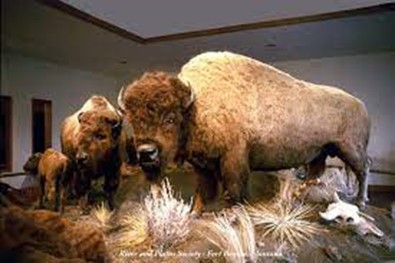
In 1886, when he got an inkling that bison were on their last legs back in his home country, he headed to Montana and shot 25 of them. Despite their importance to the story of the westward spread of white settlers across the continent, there were no bison specimens in museum collections at the time. His hunt is considered the last successful bison hunt in the U.S. He arranged the best-looking specimens in a diorama standing around a drying up water hole, looking solemn.

The Restored Bison display at the Museum of the Northern Great Plains

Two decades after Hornaday’s death in 1937, while workers at the Smithsonian museum were dismantling his bison display they found a note he wrote (a time capsule within a time capsule) pleading to the future caretakers. It read:

To my illustrious successor:

 Dear Sir, Enclosed please find a brief and truthful account of the capture of the specimens which compose this group. The Old Bull, the young cow, and the yearling Calf you find here were killed by yours truly. When I am dust and ashes, I beg you to protect these specimens from deterioration and destruction. Of course they are crude productions in comparison with what you may produce, but you must remember at this time (A.D. 1888. March 7.), the American School of Taxidermy has only just been recognized. Therefore give the devil his due and revile not.

Wm. T. Hornaday. Chief Taxidermist, U.S. National Museum

Though they appreciated his note and novel delivery, they did not heed it. They put his bison in the basement and replaced them with freshly skinned bison. Bison that had never been wild. The original mounts were taken out of storage, scattered around the country, and almost lost until Douglas Coffman hunted down the nearly forgotten specimens. He had them restored in the 1980s and 1990s. They are now on display at the Museum of the Northern Great Plains in Fort Benton, Montana. Including the original glass eyeballs. A shrine to the invisible fence of history.

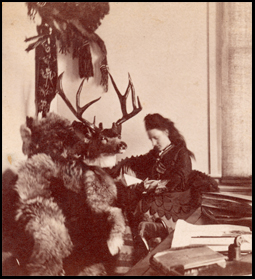
William Temple Hornaday and helpers in his workshop at the Smithsonian Institution, 1880

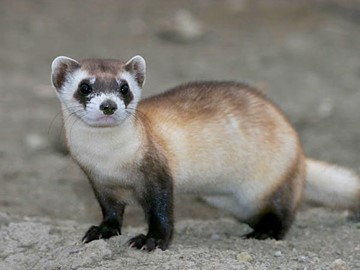
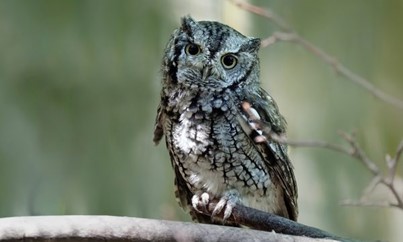
Martha Maxwell is now recognised as the first female taxidermist to prepare her own skins and mounts, AND the first taxidermist to pose animals in a natural position in a realistic natural history display. In her pursuit to understand and document the natural world, she discovered several species not known to live in Colorado, including the black-footed ferret and a subspecies of the Eastern Screech owl. In 1877, in tribute to Martha, that owl was given the scientific name, (now) Magascops asio maxwelliae.

Black-footed Ferret. So cute.

The Hornaday Smithsonian group of bison is one of the most significant collections emblematic of the human wildlife interactions that took place during the gilded age in North America. A three-dimensional reminder of the legendary abundance of the plains and the casualties of manifest destiny. Or, maybe to you they represent the trash heap of American imperialism, the fetishistic colonial gaze, an archetype of the failures and successes of the conservation movement, or something else entirely? You can stand in front of them at a free museum and report back.

About herself, Martha wrote:

 My life is one of physical work, an effort to prove the words spoken by more gifted women…. The world demands proof of womans [sic] capacities, without it words are useless.

Considering that sentiment, it is especially sad that the fruits of her labour were lost to time. But the juxtaposition of these two stories reminds me that the records from the past are biased, limited, and obvs, written by those in power. Objects iteratively create and preserve memories. Annatomized in the smallest way here, the stories we tell about the past and the cultural memory keeping done by museums have a role in structuring our current reality.

Eastern Screech-Owl